
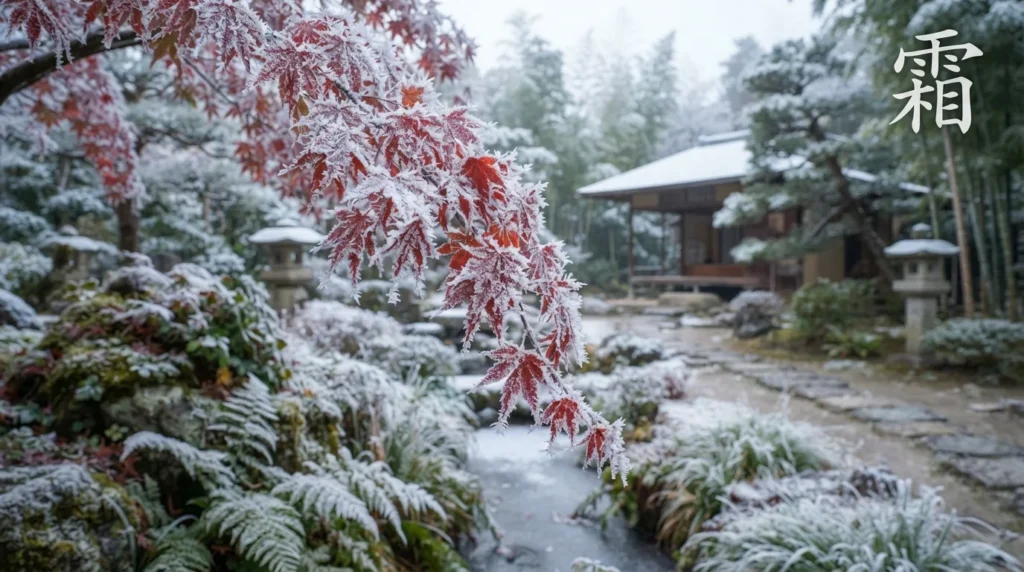
Beautiful Japanese Names That Mean Frost
- Shimo (霜) — Frost
- Shimoka (霜花) — Frost flower
- Shimoyo (霜世) — World of frost
- Shimari (霜里) — Frost village
- Shimeno (霜野) — Frost field
- Shimika (霜香) — Fragrant frost
- Shimina (霜菜) — Frost greens
- Shimako (霜子) — Frost child
- Shimoto (霜翔) — Frost soaring
- Shimura (霜良) — Good frost
- Shimane (霜音) — Sound of frost
- Shimariha (霜里葉) — Frosty village leaves
- Shimokae (霜楓) — Frost maple
- Shimitsu (霜光) — Frost light
- Shiminae (霜苗) — Frost seedling
- Shimirei (霜麗) — Beautiful frost
- Shimifu (霜風) — Frost wind
- Shimiko (霜湖) — Frost lake
- Shimisa (霜紗) — Frost silk
- Shimino (霜乃) — Of the frost
These names directly embrace the beauty of frost and are perfect if you want a calm, elegant, winter-inspired identity. Save your favorites and compare how each meaning fits your style.
Japanese Girl Names Inspired by Frost
- Fuyuka (冬花) — Winter flower
- Fuyumi (冬美) — Beautiful winter
- Fuyuno (冬乃) — Of winter
- Koyuki (小雪) — Little snow
- Yukina (雪菜) — Snow greens
- Yukino (雪乃) — Snow field
- Yukika (雪花) — Snow flower
- Yukiri (雪莉) — Snow jasmine
- Setsuna (雪奈) — Snow blessing
- Reika (冷花) — Cold flower
- Tsurara (氷柱) — Icicle
- Hiyori (日和) — Calm winter weather
- Mizore (霙) — Sleet
- Rin (凛) — Cold, dignified
- Reina (麗凛) — Graceful cold beauty
- Kanna (寒菜) — Winter greens
- Sayuki (小雪希) — Hope of little snow
- Fubuki (吹雪) — Snowstorm
- Suzuha (涼葉) — Cool leaves
- Hyoka (氷花) — Ice flower
Many of these names are inspired by snow, ice, and winter blossoms rather than frost alone, giving them a gentle and poetic feel. They are popular choices for stories, games, and baby naming inspiration.
Japanese Boy Names Inspired by Frost
- Fuyu (冬) — Winter
- Touma (冬真) — True winter
- Touya (冬也) — Winter one
- Yukio (雪男) — Snow man
- Yukihiro (雪宏) — Great snow
- Yukinari (雪成) — Snow becomes
- Reito (冷斗) — Cold star
- Hyoma (氷真) — True ice
- Gin (銀) — Silver
- Rei (冷) — Cold
- Sora (蒼空) — Cool blue sky
- Kaito (海翔) — Ocean flight
- Hayate (颯) — Swift cold wind
- Akito (秋冬) — Autumn and winter
- Tsubasa (翼) — Wings through winter
- Haruto (陽冬) — Winter sunlight
- Ren (蓮・凛) — Lotus or dignified
- Isamu (勇) — Brave through winter
- Seiya (星夜) — Starry night
- Hokuto (北斗) — Northern Star
These names combine strength with the calm beauty of winter. They work well for boys, fictional heroes, and characters connected to snowy landscapes.
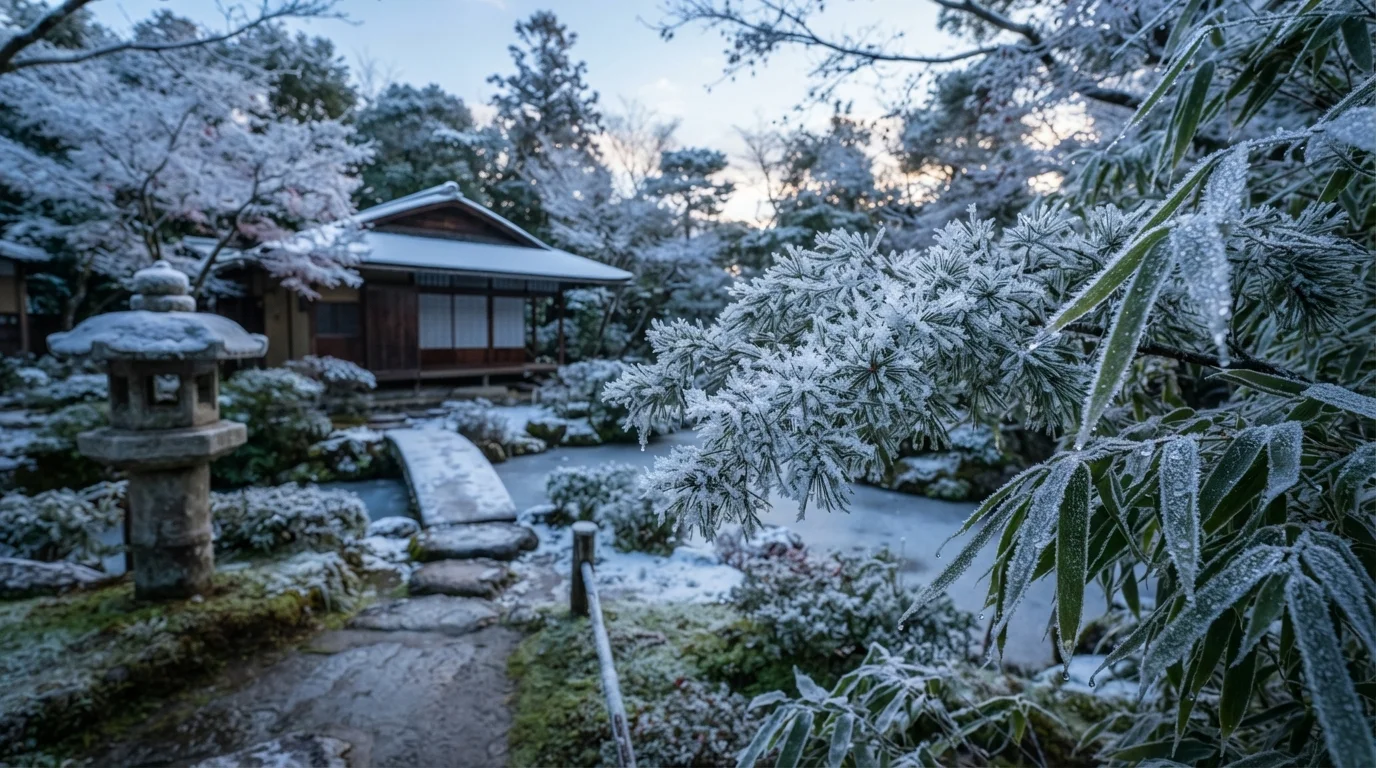
Japanese Names That Mean Ice
- Koori (氷) — Ice
- Hyoga (氷河) — Glacier
- Hyoka (氷花) — Ice flower
- Hyorin (氷凛) — Ice dignity
- Hyosei (氷星) — Ice star
- Hyouma (氷馬) — Ice horse
- Hyorei (氷麗) — Beautiful ice
- Koorina (氷奈) — Ice blessing
- Koorika (氷花) — Ice blossom
- Hyoto (氷翔) — Flying ice
- Reihyo (冷氷) — Cold ice
- Ginhyo (銀氷) — Silver ice
- Hyoshi (氷志) — Ice spirit
- Hyorinji (氷林司) — Ice forest ruler
- Hyosuke (氷介) — Ice helper
- Hyoji (氷司) — Ice guardian
- Hyomaru (氷丸) — Ice circle
- Hyoichi (氷一) — First ice
- Hyoriku (氷陸) — Frozen land
- Hyorai (氷雷) — Ice thunder
Ice-themed names create a crisp, powerful image and naturally complement frost-inspired naming ideas.
Japanese Names That Mean Snow
- Yuki (雪) — Snow
- Yukina (雪奈) — Snow blessing
- Yukito (雪翔) — Flying snow
- Yukiya (雪也) — Snow one
- Yukimi (雪美) — Beautiful snow
- Yukine (雪音) — Snow sound
- Yukika (雪花) — Snow flower
- Yukari (雪香) — Snow fragrance
- Yukiyo (雪世) — Snow world
- Yukinao (雪直) — Honest snow
- Yukimasa (雪正) — Righteous snow
- Yukisato (雪里) — Snow village
- Yukiharu (雪陽) — Sunny snow
- Yukiko (雪子) — Snow child
- Yukihisa (雪久) — Eternal snow
- Yukisora (雪空) — Snowy sky
- Yukishiro (雪白) — Snow white
- Yukifumi (雪文) — Snow writing
- Yukisuzu (雪鈴) — Snow bell
- Yukinobu (雪信) — Faithful snow
Snow-related names are among the most beloved in Japanese culture because they symbolize purity, peace, elegance, and new beginnings.
Elegant Japanese Winter Names
- Fuyuha — Winter leaf
- Fuyuki — Winter hope
- Fuyuto — Winter person
- Kanade — Harmonious melody
- Suzuka — Cool fragrance
- Suzune — Cool sound
- Rinka — Dignified flower
- Reiko — Graceful child
- Shizuku — Water droplet
- Aoi — Hollyhock blue
- Kaede — Maple
- Asahi — Morning sun
- Nozomi — Hope
- Akira — Bright
- Minori — Harvest
- Haruna — Spring greens
- Chiharu — Thousand springs
- Natsuki — Summer hope
- Mio — Beautiful cherry thread
- Ayaka — Colorful flower
Winter-inspired names don’t always mention frost directly. Instead, they capture the peaceful atmosphere, cool air, sparkling landscapes, and quiet beauty that make frosty mornings so memorable.
Rare Japanese Names Associated With Frost
- Shimorei (霜麗) — Beautiful frost
- Shimokaede (霜楓) — Frosted maple
- Shimotsuki (霜月) — Frost month (traditional name for November)
- Reifuu (冷風) — Cold wind
- Hyorin (氷凛) — Dignified ice
- Fuyusei (冬星) — Winter star
- Fuyusora (冬空) — Winter sky
- Touki (冬輝) — Winter radiance
- Koorihime (氷姫) — Ice princess
- Ginsetsu (銀雪) — Silver snow
- Reigetsu (冷月) — Cold moon
- Hyouka (氷華) — Ice blossom
- Reikaede (冷楓) — Cold maple
- Fuyumine (冬峰) — Winter peak
- Shizuhyo (静氷) — Quiet ice
- Ginrei (銀麗) — Silver beauty
- Setsurei (雪麗) — Beautiful snow
- Tousei (冬星) — Winter star
- Hyourei (氷玲) — Crystal ice
- Fuyurin (冬凛) — Dignified winter
Rare names often combine seasonal kanji in creative ways, making them excellent choices if you want something distinctive yet rooted in Japanese naming traditions. If one of these stands out, save it and explore different kanji combinations with the same pronunciation.
Japanese Unisex Names Inspired by Frost and Winter
- Rin — Dignified
- Rei — Cool, graceful
- Yuki — Snow
- Haru — Spring or sunshine (depending on kanji)
- Akira — Bright
- Kaoru — Fragrance
- Sora — Sky
- Minato — Harbor
- Ren — Lotus or dignified
- Aoi — Blue or hollyhock
- Makoto — Sincerity
- Subaru — Pleiades star cluster
- Izumi — Spring, fountain
- Nao — Honest
- Hikaru — Light
- Chihiro — Thousand fathoms
- Nagi — Calm sea
- Itsuki — Tree
- Kohaku — Amber
- Mio — Beautiful thread
Unisex names are a great option for modern families, writers, and gamers. Many of them reflect nature and elegance rather than a specific gender, making them timeless choices.
Japanese Nature Names That Capture a Frosty Feeling
- Asahi — Morning sun
- Tsuki — Moon
- Hoshi — Star
- Gin — Silver
- Kumo — Cloud
- Kaze — Wind
- Mori — Forest
- Yama — Mountain
- Kawa — River
- Umi — Sea
- Taki — Waterfall
- Kaede — Maple
- Sakura — Cherry blossom
- Shizuku — Dewdrop
- Aki — Autumn
- Fuyu — Winter
- Hotaru — Firefly
- Sora — Sky
- Kiri — Mist
- Kasumi — Haze
Nature has always played an important role in Japanese names. Frost is rarely viewed alone—it is part of a larger seasonal landscape that includes mountains, rivers, stars, and crisp winter skies.
Japanese Names Inspired by Snow, Ice, and Winter Legends
- Yukihime — Snow princess
- Koorihime — Ice princess
- Ginhime — Silver princess
- Tsukihime — Moon princess
- Yukikage — Snow shadow
- Hyoujin — Ice guardian
- Reijin — Cold spirit
- Fubukihime — Snowstorm princess
- Yukimaru — Snow circle
- Ginmaru — Silver circle
- Hoshiyuki — Star snow
- Reikage — Cold shadow
- Fuyukage — Winter shadow
- Shimohime — Frost princess
- Yukitora — Snow tiger
- Hyouryu — Ice dragon
- Reiryu — Cold dragon
- Yukitsuru — Snow crane
- Shirayuki — Pure white snow
- Ginsei — Silver star
These names have a mythical feel that works especially well for fantasy novels, role-playing games, anime-inspired characters, and creative storytelling.
Japanese Anime-Style Frost Names
- Hyoka
- Yukari
- Fuyuna
- Reito
- Shion
- Aisora
- Hikari
- Touka
- Yukina
- Reisa
- Fuyuka
- Koorina
- Hyosei
- Ginka
- Setsuna
- Yukiri
- Reimi
- Touya
- Hyouma
- Shirayuki
Anime-style names often focus on beautiful sounds as much as meaning. Many of these pair well with frost-inspired characters thanks to their elegant and memorable pronunciation.
Japanese Names That Symbolize Cold Beauty
- Reika — Graceful cold flower
- Rin — Dignified elegance
- Gin — Silver
- Reimi — Beautiful cold
- Suzune — Cool sound
- Ginka — Silver flower
- Hyouka — Ice blossom
- Reina — Graceful beauty
- Kiyora — Pure beauty
- Sayuki — Gentle snow
- Fuyumi — Beautiful winter
- Yukika — Snow flower
- Reiko — Lovely child
- Aika — Love song
- Mio — Beautiful thread
- Koharu — Little sunshine
- Nozomi — Hope
- Ayame — Iris
- Hina — Sunshine
- Kanon — Flower sound
These names express the quiet elegance often associated with frost. Instead of focusing only on cold weather, they evoke purity, grace, and peaceful beauty.